OpticeuticalsThe Category Authority
Definition

The Opticeutical Standard.

Six pillars define what qualifies a product to bear the Opticeutical name. The standard is published, public, and constructed so that any product can be evaluated against it.

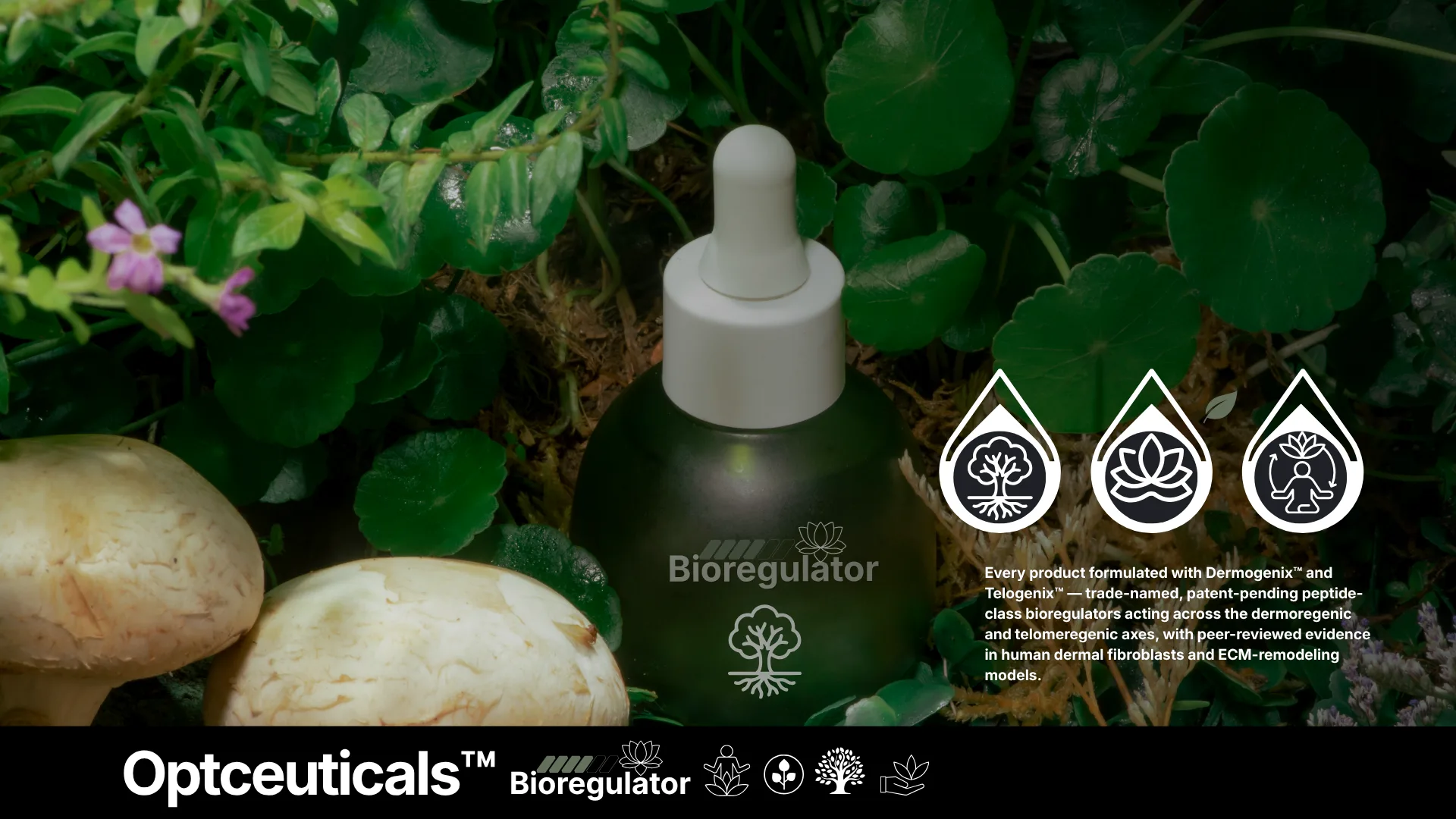
A precision dropper bottle with botanical ingredients — the qualifying product reference

Why a Standard

The nutraceutical category became a synonym for any dietary supplement. Quality varies so widely that the word itself carries no inference about what is inside the bottle.

Published research has documented that supplements not subject to independent testing are significantly more likely to contain contaminants or to fail label claims. A category-level standard, applied uniformly, is the mechanism by which a buyer, clinician, or partner can recognize a higher tier without having to audit each product individually.

The need is most acute in categories where mechanism complexity outruns label clarity — peptide-class bioregulator formulations, longevity and anti-aging supplements where the science is real but the consumer cannot evaluate it directly, and any product whose value depends on bioavailability rather than ingredient presence alone. The Opticeutical Standard governs all of these under a single published framework.

The Opticeutical Standard is published in full below. A product either meets all six pillars or it does not qualify.

The Standard

Six pillars.

Pillar 01

Composition Rigor

The product is formulated at clinically relevant doses, not token amounts. Each active ingredient appears at a level supported by published research, expressed in a form the body can use. Filler ingredients, opaque proprietary blends, and undisclosed quantities are incompatible with the standard.

Pillar 02

Bioavailability

Active forms are preferred over inactive precursors where the evidence supports it. Methylfolate over folic acid, methylcobalamin over cyanocobalamin, magnesium glycinate or malate over magnesium oxide. The standard treats absorption as a first-order property, not a marketing claim.

Pillar 03

Mechanism Rationale

Each formulation has an articulated mechanism of action grounded in published science, including the bioregulator framework where applicable. The standard does not accept formulations that work through unspecified mechanisms or that rely on the brand asserting effects without explaining how.

Pillar 04

Third-Party Verification

Independent laboratory testing confirms identity, potency, and contaminant-free composition for every production batch. USP, NSF, Informed Choice, ConsumerLab, or equivalent ISO 17025 accredited verification. The certificate of analysis is available on request and where possible published.

Pillar 05

Manufacturing Discipline

Production occurs in cGMP-certified facilities. Process documentation, batch records, change-control procedures, and traceable raw-material provenance are maintained throughout the supply chain. The standard treats manufacturing as a regulated practice, not a logistical detail.

Pillar 06

Sourcing Integrity

Raw materials are traceable to their origin. Ingredients are screened for adulterants, heavy metals, and microbial contamination. Geographic sourcing is disclosed where material to product identity. The standard treats opacity in sourcing as disqualifying.


Application

How the standard is applied.

A product meeting all six pillars qualifies as an Opticeutical. The qualification is not a brand affiliation. It is a category membership criterion. Multiple brands can produce Opticeutical-tier products, just as multiple growers can produce coffee that meets specialty grade. The standard governs the product, not the maker.

Atumnus Life Sciences maintains the standard as steward of the category and publishes revisions on a regular cadence as science and supply-chain practice evolve. The standard is a public document. Any organization may reference it, audit against it, or build products to meet it.


Common Misunderstandings

Five questions worth resolving upfront.

Q·01

Is this another supplement certification?

No. The Opticeutical Standard is a published category definition, not a certification mark. Atumnus Life Sciences does not issue certificates, does not run a paid certification program, and does not gate the use of the category name through fee-based licensing. The standard is the document; compliance is the product's responsibility to meet.

Q·02

Who verifies a product meets the standard?

Independent third-party laboratories. The standard requires ISO 17025 accredited verification — USP, NSF, ConsumerLab, Informed Choice, or equivalent — performed at the batch level. The structural separation between steward and verifier is deliberate. Atumnus Life Sciences cannot self-certify a product as meeting the standard.

Q·03

How is this different from USP Verified or NSF Certified?

Those programs verify identity, potency, and contaminant load — the verification pillar. The Opticeutical Standard uses those programs as the verification mechanism but imposes five additional pillars: composition rigor, bioavailability, mechanism rationale, manufacturing discipline, and sourcing integrity. USP and NSF tell you what is in the bottle is accurate. The standard determines whether what is in the bottle should have been there in the first place.

Q·04

Is this an FDA designation?

No. Opticeutical is a category designation. It sits within the food and supplement regulatory framework established by DSHEA in 1994. FDA does not designate categories of supplements; FDA regulates manufacturing, labeling, and safety. The Opticeutical Standard is voluntary discipline above the regulatory floor, not a regulatory class.

Q·05

What if a product meets five pillars but not the sixth?

It is not an Opticeutical. The standard is constructed as an all-or-nothing qualifier rather than a graded score. A formulation may be excellent on five dimensions and still fail the standard on the sixth. The all-or-nothing design is deliberate: a category name with partial qualification collapses into the same vocabulary problem the standard exists to solve.